
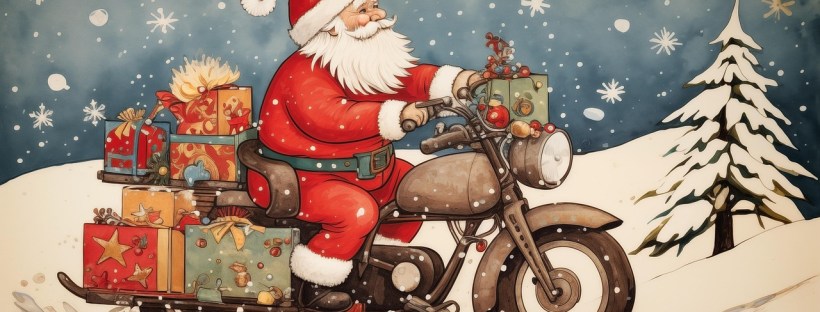
Ever wonder if Santa checks his mail under different names as he travels the globe? You bet he does! While the jolly man in the red suit is a universal symbol of holiday cheer, his name changes fascinatingly from country to country. It’s a fun reminder of how traditions weave into different cultures.
In many Spanish-speaking countries, children await Papá Noel. Meanwhile, in France, he’s known as Père Noël (Father Christmas). Italians excitedly write letters to Babbo Natale, which translates simply to “Christmas Daddy.”
Venture into German-speaking regions, and you’ll meet Weihnachtsmann, literally “Christmas Man.” The Dutch have a particularly close link to the legend; their Sinterklaas (a contraction of Sint Nikolaas) is the direct historical precursor to the Santa we know today, who then evolved into the American “Santa Claus.”
In Brazil and Portugal, despite the warm December weather, Papai Noel still delivers gifts. In Russia, the figure is Ded Moroz (Grandfather Frost), who often arrives with his granddaughter, Snegurochka (The Snow Maiden).
In Japan, where Christmas is more a festive season than a religious holiday, the borrowed term サンタクロース (Santa Kurōsu) is widely used. And in Hawaii, you might hear the joyful shout of “Kanakaloka!”
No matter the language—be it Joulupukki in Finnish or Święty Mikołaj in Polish—the core magic remains the same. It’s the spirit of generosity, wonder, and kindness that truly defines him.
So this season, when you hear the reindeer on the roof, remember he answers to many names. The important thing is that you’re on the nice list!
Discover more from Valodu kursi 🌍 Tulkošanas pakalpojumi
Subscribe to get the latest posts sent to your email.

 Valodu kursi 🌍 Tulkošanas pakalpojumi