
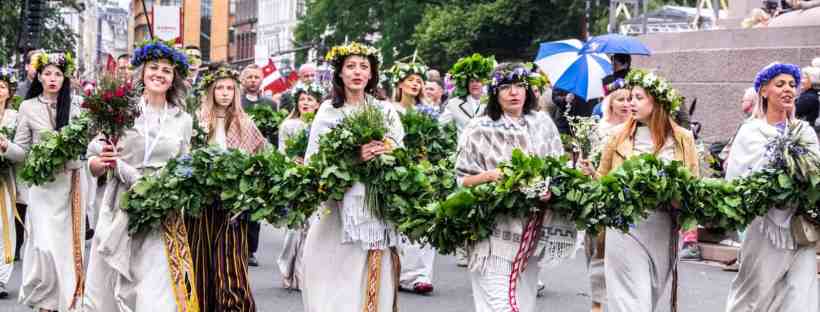
When we think of beautiful European languages, French or Italian often come to mind. But nestled on the eastern shore of the Baltic Sea is a linguistic gem that deserves a spot on that list: the Latvian language. More than just a tool for communication, Latvian is a melodic and ancient tongue that offers a unique window into the culture and soul of its people.
So, what exactly makes Latvian so beautiful? Its charm lies in a blend of sonic elegance, ancient heritage, and a deep, intrinsic connection to nature.
A Melody of Vowels and a Gentle Rhythm
To the foreign ear, Latvian often sounds surprisingly soft and musical. This is no accident. The language operates on a foundation of vowel harmony and a fixed, gentle stress pattern.
- Musical Stress: Unlike English, where stress can be unpredictable, Latvian almost always stresses the first syllable of a word. This creates a consistent, rhythmic cadence that feels like a steady, calming drumbeat in conversation.
- Vowel Harmony: Latvian has a rich system of long and short vowels, and its phonetics avoid harsh, guttural sounds. The language is full of open vowels and soft consonants, giving it a flowing, almost singing quality. Listen to a Latvian folk song, or dainas, and you’ll hear this musicality in its purest form.
An Ancient Time Capsule
Latvian is one of only two living Baltic languages (the other being Lithuanian), and it is a modern-day portal to the past. It is considered one of the most archaic languages in Europe, meaning it has preserved many features of the ancient Proto-Indo-European language, the common ancestor of most languages from English to Hindi.
This ancient connection means that Latvian retains complex grammatical structures and vocabulary that can trace their lineage back thousands of years. For linguists and language lovers, speaking Latvian is like listening to a living echo of prehistoric Europe.
A Poetic Mirror of Nature and Culture
Perhaps the most beautiful aspect of Latvian is its deep, poetic relationship with the natural world. Latvia is a country of vast forests, tranquil lakes, and a long coastline, and this is reflected directly in its vocabulary.
The language is rich with words that precisely and beautifully describe natural phenomena. For example:
- Lapsa (fox) – A word that feels as quick and sly as the animal itself.
- Gaisa dzirnaviņas – This poetic term literally translates to “air windmills” and is the beautiful, old-fashioned word for a tornado or whirlwind.
- Sniegpārsla (snowflake) – A perfect compound of sniegs (snow) and pārsla (flake).
This connection extends to the core of Latvian identity through the dainas, a vast corpus of thousands of traditional folk songs. These short, poetic verses encapsulate ancient wisdom, mythology, and the Latvian worldview, with the language itself being the vessel that has carried this cultural treasure for centuries.
A Testament to Resilience
Finally, the beauty of Latvian is also the beauty of resilience. Despite centuries of foreign rule and political pressure, the Latvian language has not only survived but has flourished as the primary symbol of national identity. The commitment of the Latvian people to preserve and speak their mother tongue adds a layer of profound cultural significance to its every word and sentence.
In conclusion, the Latvian language is beautiful not just for how it sounds, but for what it represents: an ancient melody, a poetic soul, and an unbreakable spirit.
Discover more from Valodu kursi 🌍 Tulkošanas pakalpojumi
Subscribe to get the latest posts sent to your email.

 Valodu kursi 🌍 Tulkošanas pakalpojumi